Last weekend, Edmonton took on more than 100 mm of rain. Last night and through today, another 30 mm fell. When I came into the 3D-printer farm in the workshop this morning, there was a slow stream of water seeping onto the concrete floor—creeping out from somewhere around the foundation or a window. The exact source is hidden behind gyprock, so I can't tell precisely where it's coming from.
Nothing a shop vac can't handle.
But more rain is forecast all weekend. Unless we're actively printing something, that corner of the workshop doesn't get much traffic, and I really didn't want to spend the next couple of days hanging around to run a shop vac every few minutes.
Fortunately, the floor works in my favour. The way the concrete is sloped, the leak feeds a narrow stream toward the middle of the room, where a low spot lets the water pool. Left alone, that little lake grows until it reaches the next room—the one with carpet—and that brings a whole other set of problems.
So I started thinking about the tools at hand and my well-stocked workshop. Could I rig up something to keep the floor—and that carpet—dry?
The parts were already on the shelf
My favourite microcontroller right now is the ESP32, and I have plenty of them sitting around, waiting to be put into the game. I also keep solid-state relays on hand—both commercial units and ones I've designed and printed PCBs for myself.
An SSR lets a microcontroller switch something that plugs into the wall on and off. My shop vac is a 120 VAC unit that draws about 10 A—easily within what the relay can handle. So the ESP32 can switch the vac on and off on whatever schedule I tell it to.
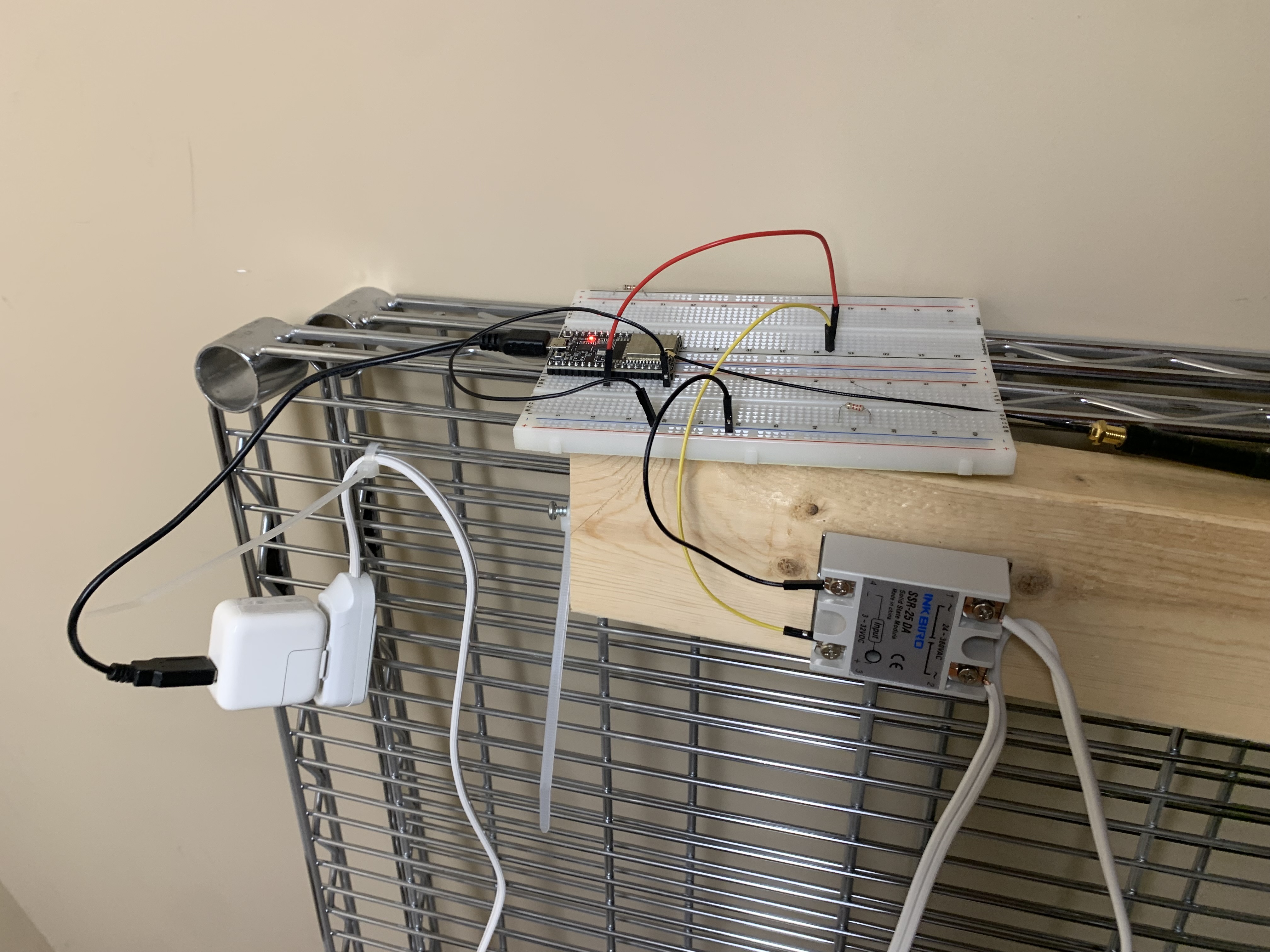
A tiny web server for the job
Here's the thing—I didn't know up front how long the vac needed to run, or how long to wait between runs. And as the rain picks up or eases off, I'd want to change that. So I put a small web server on the ESP32 and built a deliberately tiny web page: set the on-time, set the period, and a checkbox for whether the unit should run at all. If it's off, it stays off.
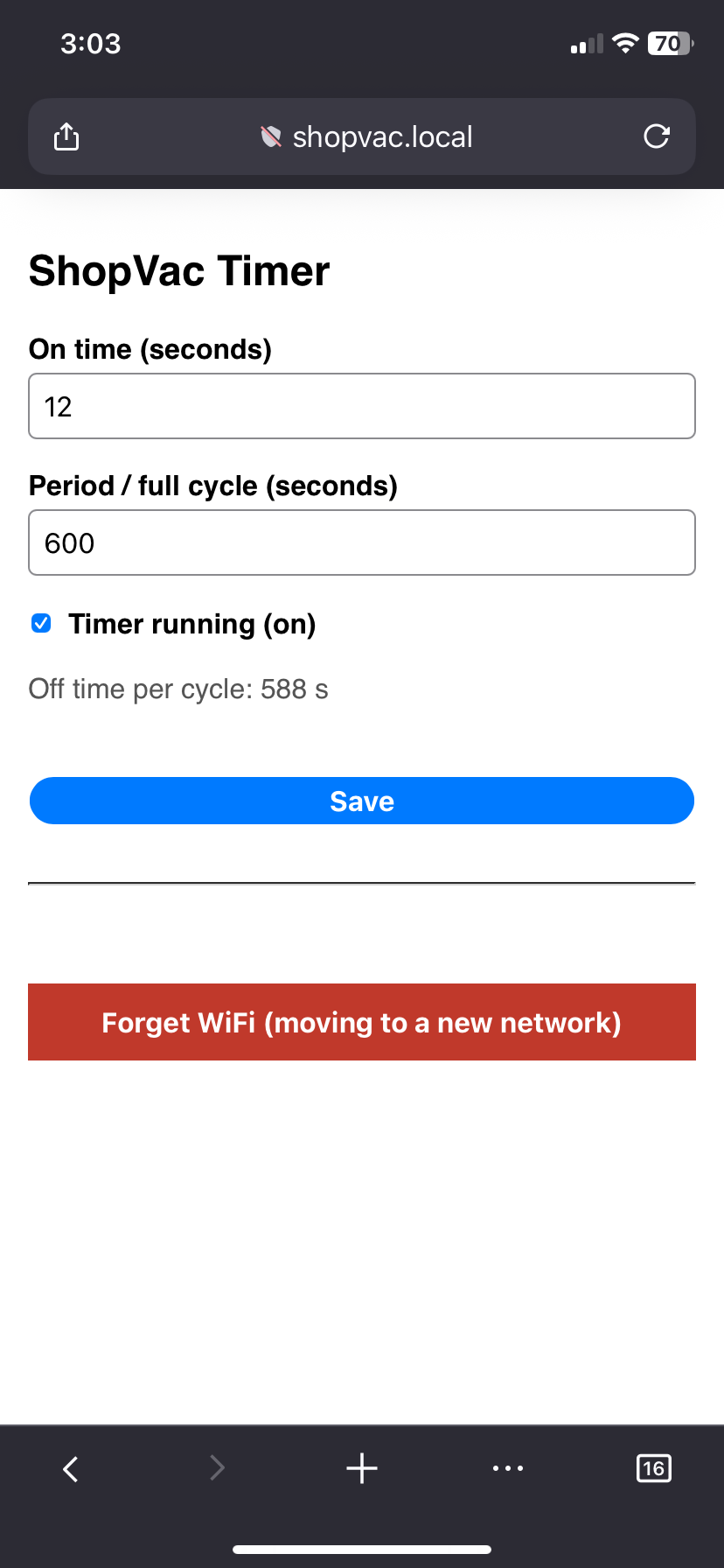
A breadboard for the microcontroller, a board with a few washers to stand the SSR off its base, zip ties to keep the relay well above the floor, and—boom—a shop vac that switches itself on for twelve seconds every ten minutes.
Two pails and a hose
We go through a lot of cement here, and we store it in 20 L pails. They're heavy. A couple of them were exactly what I needed to trap the shop vac hose in place, with the vac head parked right over the little stream.
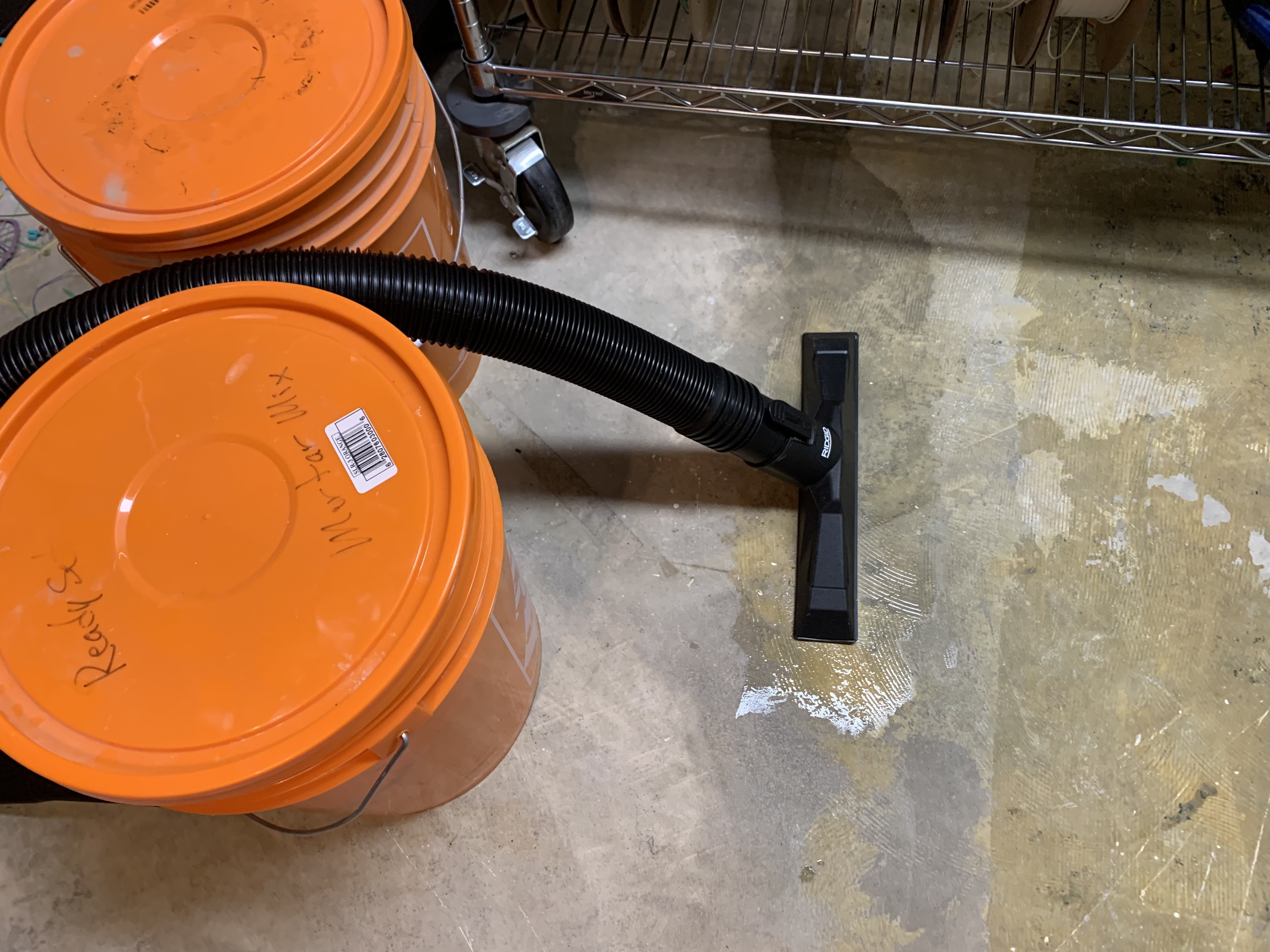
Problem solved for the weekend.
Why this matters
I believe you need to know your tools inside and out—the ESP32, the relay, the web stack, the shop vac, even the weight of a full pail of mortar mix. None of those is exotic on its own. The value is in knowing each one well enough that, when a problem shows up unannounced on a rainy Saturday morning, you can reach for the right combination without thinking twice.
It helps you respond when response time is king.
It's the same instinct behind everything we build here. The products that leave this bench are made by someone who knows the parts cold—and that's exactly why they hold up when it counts.