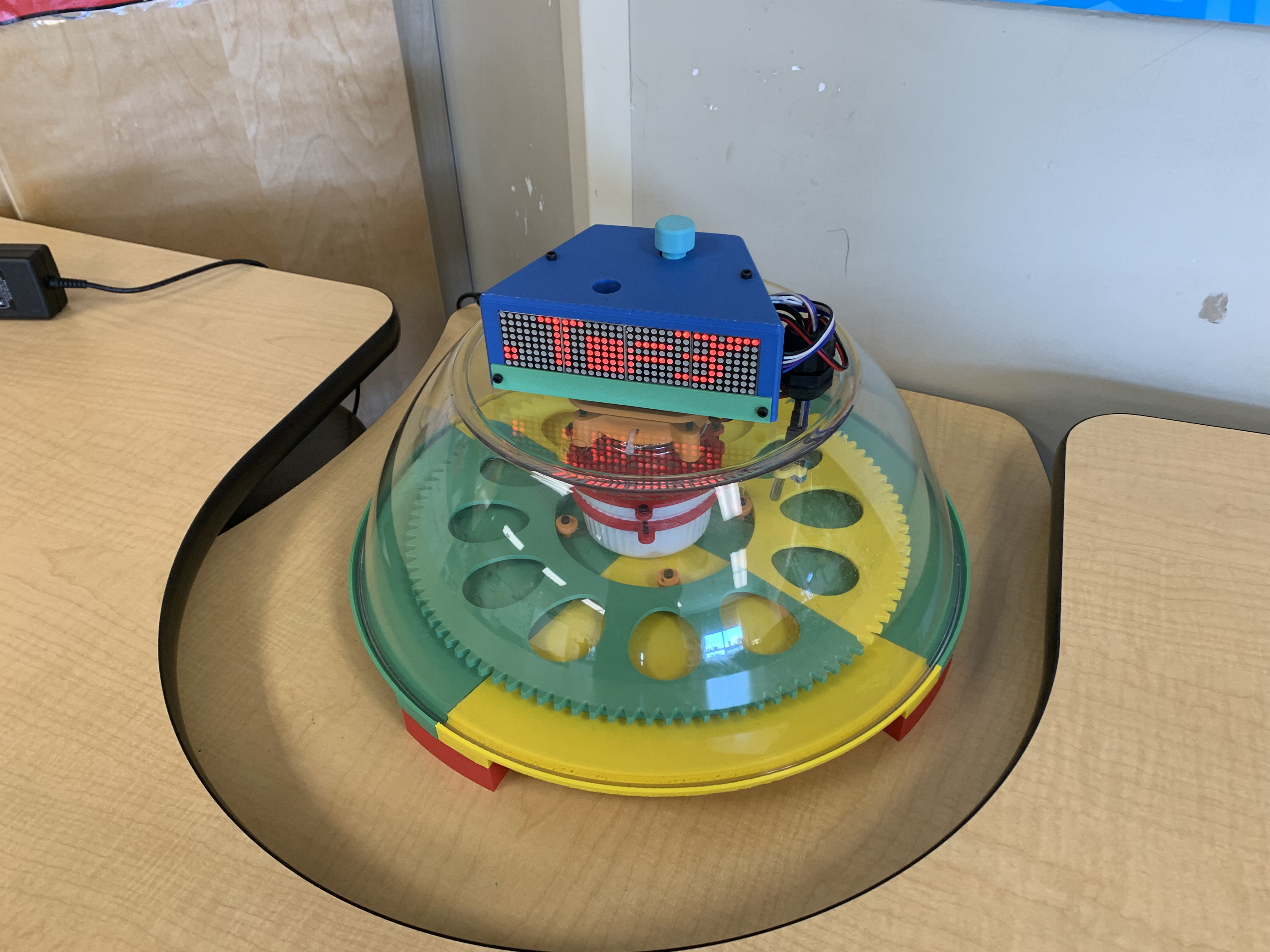
A fully transparent egg incubator, designed for Grade 1 classrooms and seniors complexes. It does all the work automatically—so you and your students can just watch the magic happen.
83%
Average hatch rate
1
Year of design & development
2
Years of classroom results
100+
Eggs hatched in schools
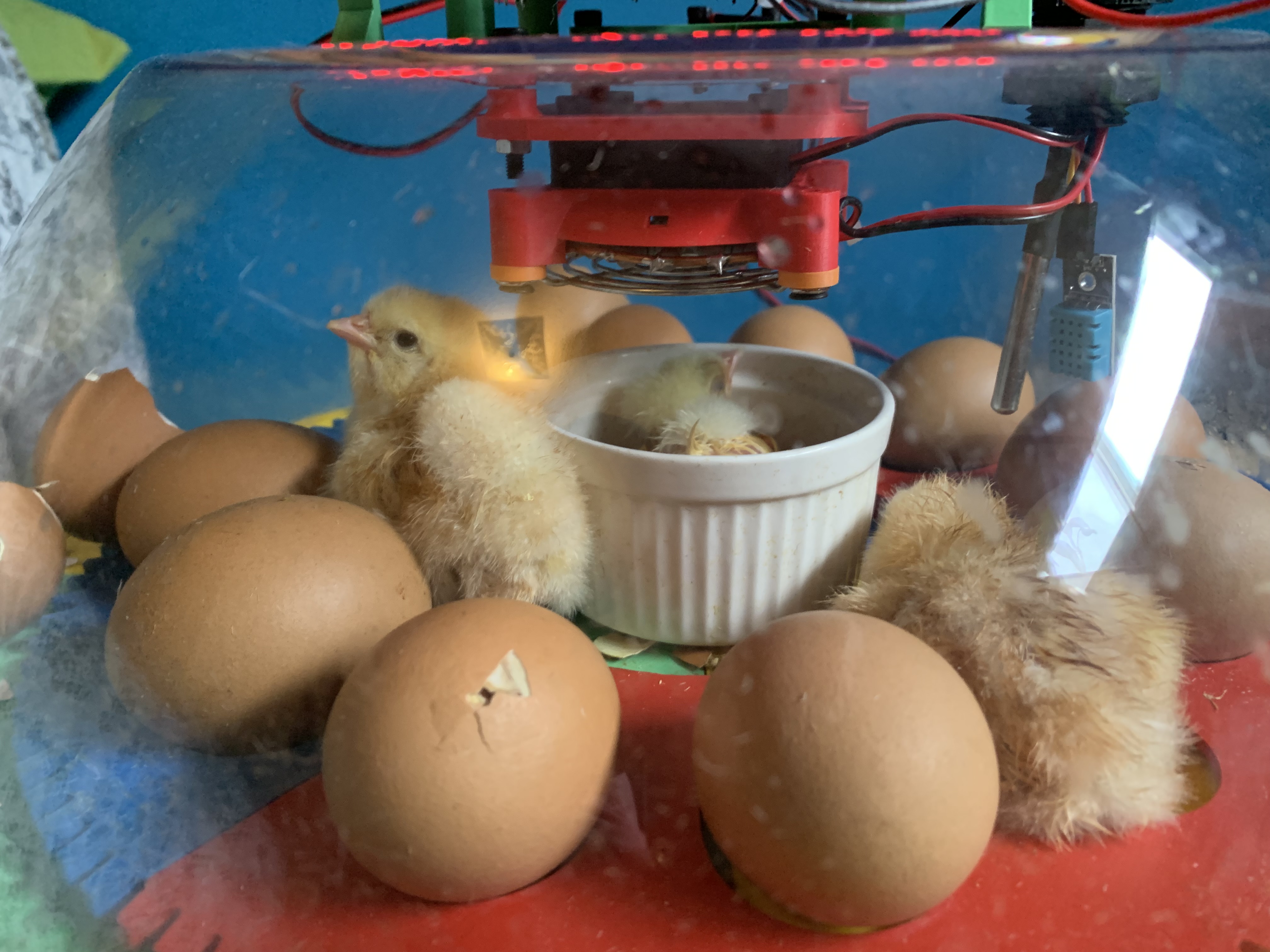
The moment they've waited forHatchlings emerge through the clear dome
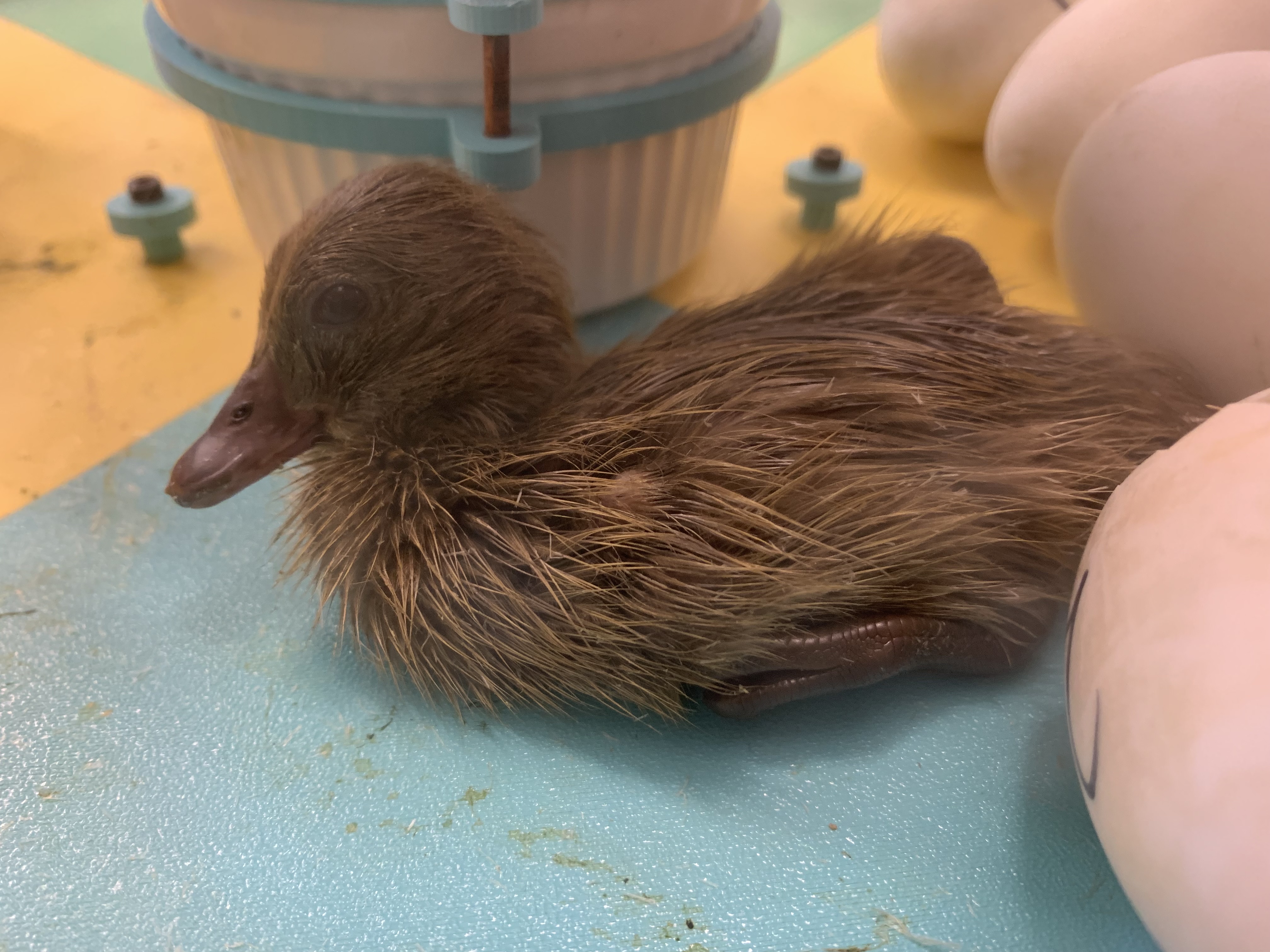
First moments of lifeA duckling minutes after hatching
Built to be watchedThe dome kids gather around all day
Real classroom results
Two years of hatching in Grade 1 classrooms—chicks, ducks, and some very excited six‑year‑olds.
Hatch rates by year
School Year
Bird
Hatch Rate
2024–25
Duck
75%
2024–25
Chicken
65%
2025–26
Duck
83%
2025–26
Chicken
63%
Two of three duck incubators reached 100% hatch rates in 2026.
Temperature — full 28‑day duck run
Held within ±0.2°C of target for the entire incubation—automatically, with no teacher intervention.
Included — Curriculum Package
Every incubator ships with classroom materials built to support provincial science Life Cycles outcomes:
Daily observation journal for students
Lifecycle stages poster for the classroom wall
Hatch‑day record sheet — who hatched first?
Post‑hatch temperature & humidity graph activity
What it does for your classroom
Children can see everythingThe clear dome means kids watch eggs every day—and they're right there when the first pips appear.
Completely automaticTemperature, humidity, and egg turning all happen on their own. Set it up once and let it run.
Chickens, ducks, quail, and moreSwitch species with a simple setting change—each gets the right temperature and humidity automatically. Custom species profiles available on request.
Live display kids can readThe scrolling LED display shows chamber temperature, humidity, and days until hatching—a science lesson on its own.
Built for a classroom environmentSafe automatic shutdown if anything goes wrong. Survived two years of curious Grade 1 hands—including one accidental reset that still resulted in a successful hatch.
Graph the whole journeyAfter the hatch, print a temperature and humidity graph of the entire incubation—a ready-made science activity.
Brings math into life sciences tooOn day one, draw columns on paper, one for each egg, and number the columns. Ask each child how many they think will hatch. Mark an X in their chosen column—the X's stack up into an instant class histogram. Post it on the wall. Kids come back to check their guess all through incubation, lockdown, and pipping, building anticipation right up to hatch day.
Proudly built in CanadaLocal product, local support. Setup included. Questions answered by the team who built it.
Curriculum Alignment — Canada
Grade 1
Big Idea — Living things have features and behaviours that help them survive in their environment
Grade 2
Big Idea — Living things have life cycles adapted to their environment
BC K–10 Science Curriculum (2023). Yukon follows BC curriculum with Yukon First Nations content integrated.
Grade 1
Living Systems — Investigate plants and animals and the relationships among them
Grade 2
Living Systems — Investigate the growth and development of plants and animals
Grade 3
Living Systems — Animal Life Cycles
Alberta K–6 Science Curriculum (March 2023). NWT follows Alberta curriculum. One incubator supports three years of Living Systems outcomes.
Grade 1
Life Science — LT1.1: Differentiate between living things; LT1.2: Animals interact with their environment to meet basic needs
Grade 2
Life Science — AN2.1: Growth and development of familiar animals including birds, and their life cycles
Saskatchewan K–12 Science Curriculum.
Grade 1
Cluster 1 — Characteristics and Needs of Living Things
Grade 2
Cluster 1 — Growth and Change in Animals
Manitoba K–8 Science Curriculum.
Grade 1
Life Systems — Needs and Characteristics of Living Things
Grade 2
Life Systems — Growth and Changes in Animals (life cycles, characteristics, adaptations)
Ontario Science and Technology Curriculum (2022).
Cycles 1–2
The Living World — Characteristics of living things; growth and reproduction of animals (Grades 1–4, teacher-selected themes)
Québec PFEQ Elementary Science. Teachers select themes; animal life cycles are a recommended topic within The Living World strand.
Grade 1
Life Science — Needs and Characteristics of Living Things
Grade 2
Life Science — Growth and Changes in Animals (life cycles and stages of development)
Foundation for Atlantic Canada Science Curriculum — shared by Nova Scotia, New Brunswick, PEI, and Newfoundland & Labrador. Nunavut draws from Atlantic and other provincial frameworks.